

Key Takeaways
- Both composite bonding and veneers improve the appearance of your teeth; they just do it differently
- Composite bonding uses tooth-coloured resin applied directly in the chair, no drilling, no lab, done in a single visit from £375 per tooth
- Veneers are custom-made porcelain shells bonded permanently to your teeth, more durable and stain-resistant, from £800 per tooth
- Composite bonding is more affordable and reversible; veneers are longer lasting and better for more extensive transformations
- Neither is universally better; it depends on your teeth, your goals, and your budget
- The best next step is a consultation with Dr Tobi at Nonsuch Park Dental in Cheam, he’ll give you an honest recommendation with no obligation to proceed
If you’ve been thinking about improving your smile, chances are you’ve come across both composite bonding and veneers. They’re both popular cosmetic treatments; they both change how your teeth look, and, on the surface, they can seem like the same thing.
They’re not. And the differences matter when it comes to choosing what’s right for you.
Here’s an honest breakdown from Dr Tobi to cut through the confusion.
What is composite bonding?
Composite bonding is a cosmetic treatment where a tooth-coloured resin is applied directly to your teeth and sculpted by hand. Once shaped, it’s hardened with a special light and polished until it blends seamlessly with your natural smile.
It’s used to fix chips, cracks, gaps, uneven edges, and minor discolouration, often in a single appointment. No drilling, no injections in most cases, and no damage to your natural tooth structure. The whole process is minimally invasive and, crucially, reversible. According to the British Academy of Cosmetic Dentistry (BACD), composite bonding is one of the most versatile and accessible cosmetic dental treatments available when carried out by a suitably trained clinician.
At Nonsuch Park Dental in Cheam, composite bonding starts from £375 per tooth. Dr Tobi will match the resin shade precisely to your natural teeth, so the results look completely natural, not like work has been done at all.
What are veneers?
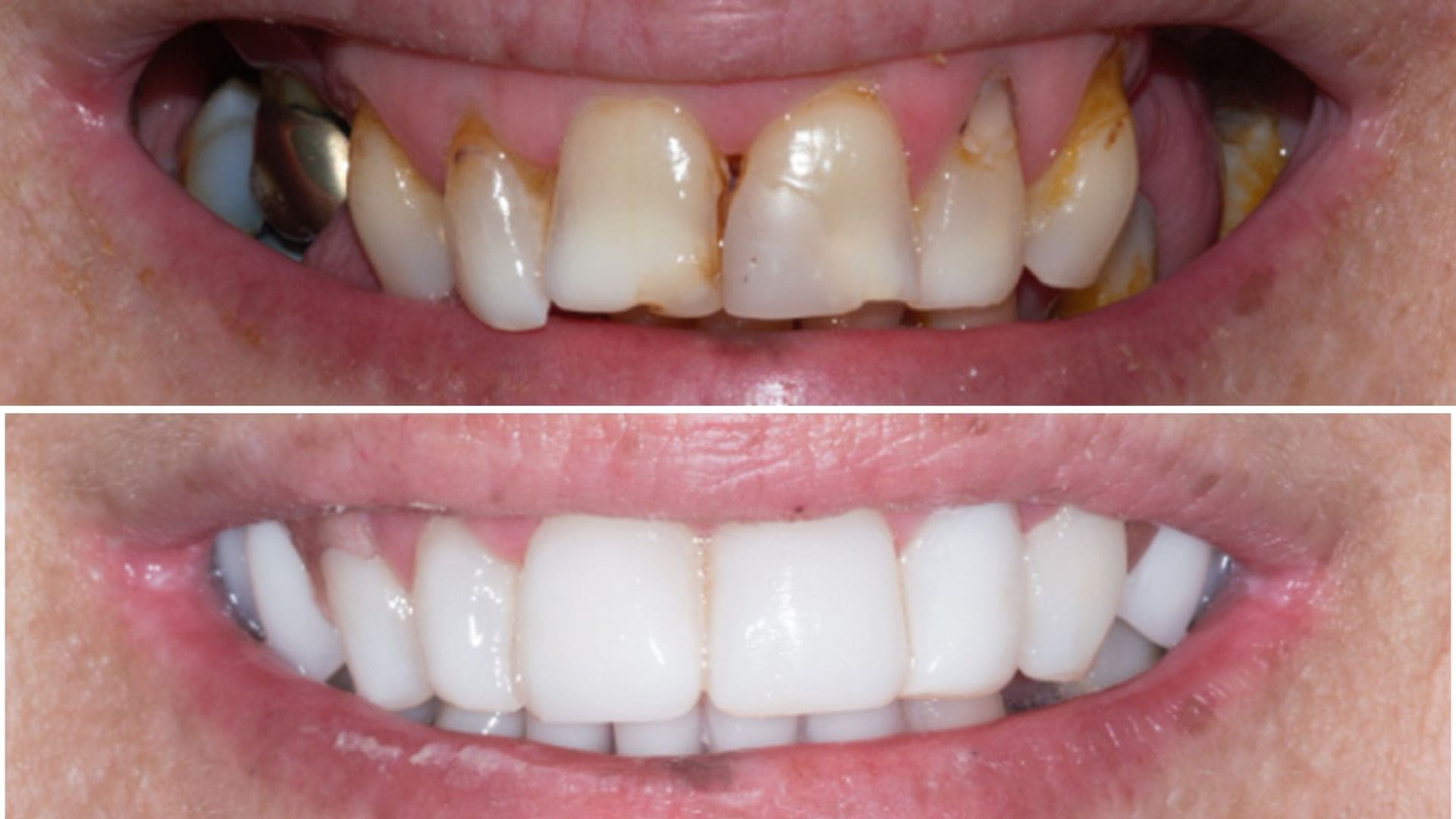
Veneers are ultra-thin porcelain shells custom-designed in a dental laboratory and bonded permanently to the front surface of your teeth. They cover imperfections and create a uniform, natural-looking smile, ideal for teeth that are heavily stained, chipped, worn, slightly misaligned, or have gaps between them.
It’s worth knowing that there are two types of veneers. Porcelain veneers are made in a laboratory from ceramic material; they’re the most durable and stain-resistant option, and what most people picture when they think of veneers. Composite veneers are made from the same resin used in bonding but applied to cover the entire front surface of the tooth rather than just a specific area. Composite veneers sit between bonding and porcelain veneers in terms of cost and longevity, a useful middle ground for some patients.
At Nonsuch Park Dental in Cheam, Dr Tobi works with skilled dental technicians to craft porcelain veneers that look completely natural and complement your face. His specialist training in Prosthodontics — a discipline recognised by the General Dental Council (GDC) as a dental specialty focused on the restoration and replacement of teeth — means every detail, shape, shade, and proportion is considered carefully. Veneers at Nonsuch Park Dental in Cheam start from £800 per tooth, with a full written quote provided after your consultation.
What’s the difference between composite bonding and veneers?
The core difference comes down to how each treatment is delivered, what it costs, how long it lasts, and what it means for your natural teeth.
Composite bonding is a chairside treatment; the resin is applied, shaped, and finished in a single visit, with no lab work needed. Because nothing is removed from the tooth in most cases, it’s completely reversible. It’s ideal for targeted improvements and is the more affordable entry point into cosmetic dentistry.
Veneers are an indirect treatment, made off-site in a lab from porcelain, requiring tooth preparation and at least two appointments. Because a small amount of enamel is permanently removed during that preparation, veneers are an irreversible commitment. Once you have them, you’ll always need to replace them. In return, you get a treatment that’s significantly more durable, more stain-resistant, and capable of delivering a more comprehensive transformation across multiple teeth.
In short: composite bonding is faster, more affordable, and more flexible. Veneers are longer lasting, more resilient, and better suited to bigger smile changes.
Which is better: composite bonding or veneers?
It depends entirely on what you’re trying to achieve, and there’s genuinely no wrong answer.
Composite bonding is likely the better fit if:
- You want to address a specific concern, a chip, a gap, or slightly uneven teeth
- You’d prefer a treatment that doesn’t permanently alter your tooth structure
- You want results in a single appointment without the wait
- Budget is a factor, and you’d like a more affordable starting point
- You’re not yet ready to commit to something permanent
Veneers are likely the better fit if:
- You want a complete smile transformation across several teeth
- Stain resistance matters, as you drink a lot of coffee, tea, or red wine
- You want the most durable, long-lasting cosmetic result
- You’re ready to commit to the process and the investment
- You’ve had composite bonding before and want something more permanent
For many patients, particularly those coming to us for the first time, composite bonding is the smartest place to start. It delivers a genuinely beautiful result, keeps your options open, and costs significantly less. Book a consultation and Dr Tobi will tell you honestly which approach makes the most sense for your teeth.
How much do composite bonding vs veneers cost?
At Nonsuch Park Dental in Cheam:
- Composite bonding starts from £375 per tooth
- Veneers start from £800 per tooth
The difference in price reflects the difference in what’s involved: laboratory fees, the number of appointments, the materials used, and the longevity of the result. Both are available with 0% interest-free finance, so you can spread the cost into manageable monthly payments without paying a penny more.
After your consultation, Dr Tobi will provide a full written quote so you know exactly what’s involved before committing to anything.
How long do they last?
The longevity of your dental restorations depends largely on how well you care for them after treatment. With proper maintenance, most restorations can last many years.
That’s why we recommend most patients wear a bite guard indefinitely. It’s one of the simplest ways to protect your work from damage caused by grinding or clenching, which can wear down or crack restorations over time.
Combined with good oral hygiene and regular check-ups, a bite guard gives your restorations the best chance of lasting as long as possible.
But to specifically mention:
Composite bonding typically lasts five to seven years with good care. It can chip under pressure: biting nails, grinding teeth, or eating very hard foods are the main culprits. The good news is that bonding is repairable. If a small area wears or chips, it can usually be touched up without redoing the whole tooth.
Veneers are more durable and can last ten to fifteen years or longer. The BACD guidelines on veneer longevity note that porcelain veneers, when correctly placed and maintained, consistently outperform composite restorations in terms of stain resistance and long-term durability. Porcelain is harder and more stain-resistant than composite resin, so it holds its appearance better over time.
In both cases, regular hygiene visits, good brushing and flossing habits, and avoiding habits that damage your teeth will all extend how long your results last. Our hygiene team at Nonsuch Park Dental can support you with this throughout your treatment and beyond. We also recommend wearing a bite guard indefinitely to protect your restorations from damage caused by grinding or clenching.
Can I combine both treatments?
Absolutely, and some patients do exactly that.
A common approach is composite bonding for minor repairs or one or two specific teeth, with veneers considered later for a more complete transformation. Because bonding is reversible, it’s a great way to trial a new look before committing to something permanent.
It’s also worth knowing that teeth whitening should always come first if you’re considering it alongside either treatment. Whitening gel only works on natural enamel — once your bonding or veneers are placed, they won’t respond to whitening. Getting your preferred shade first means everything can be matched to it.
If you’re thinking about a broader refresh, a smile makeover consultation is the ideal starting point. Dr Tobi will look at the full picture and build a plan that works for your smile and your budget.
How do I know which is right for me?
The honest answer is: come in and let’s have a look.
Both composite bonding and veneers can deliver brilliant results, but which is right for you depends on your teeth, your goals, and what you’re hoping to achieve. That’s a conversation worth having in person, not something to decide based on a blog post alone.
If you’re based in Cheam, Sutton, Ewell, Epsom or the surrounding areas and you’re exploring cosmetic dentistry options, book a consultation with Dr Tobi online or call us on 020 8642 4221. There’s no pressure, no obligation, and no hard sell, just an honest chat about your smile and what’s possible.